
Blog

  • SA Water Crisis

    SA Water Crisis

    SA Water Testing Crisis

    Water is life — but in South Africa, that life source is under serious threat. Across the country, communities, schools, and businesses are waking up to a harsh truth: many of our water sources are no longer safe to drink.

    Recent findings from citizen-led projects and the Department of Water and Sanitation have revealed widespread contamination and declining water quality. These discoveries have sparked one of the most heated debates around water testing South Africa has seen in years.

    The Shocking Reality: Unsafe Water in Our Schools

    In July 2025, the WaterCAN and WESSA Water Warrior School Water Quality Testing Project found that 43% of water samples collected from South African schools were unsafe to drink, mostly due to bacterial contamination such as E. coli.
    This alarming report has prompted national concern over how schools store and manage their water — particularly when using JoJo tanks or borehole systems.

    Read more here: IOL – 43% of school water unsafe for drinking

    Parents and teachers are now demanding regular water testing from accredited labs to ensure children’s safety. This is where SANS 241 water testing plays a critical role — providing scientifically backed benchmarks for safe, compliant water.

    To learn more about how you can test school or borehole water, visit SANS Water.

    Municipal Water Decline: When Tap Water Isn’t Trustworthy

    It’s not just schools at risk. Government data shows a steady drop in municipal water quality compliance, with over half of South Africa’s municipalities failing to meet the SANS 241 drinking water standards.
    (TimesLIVE report)

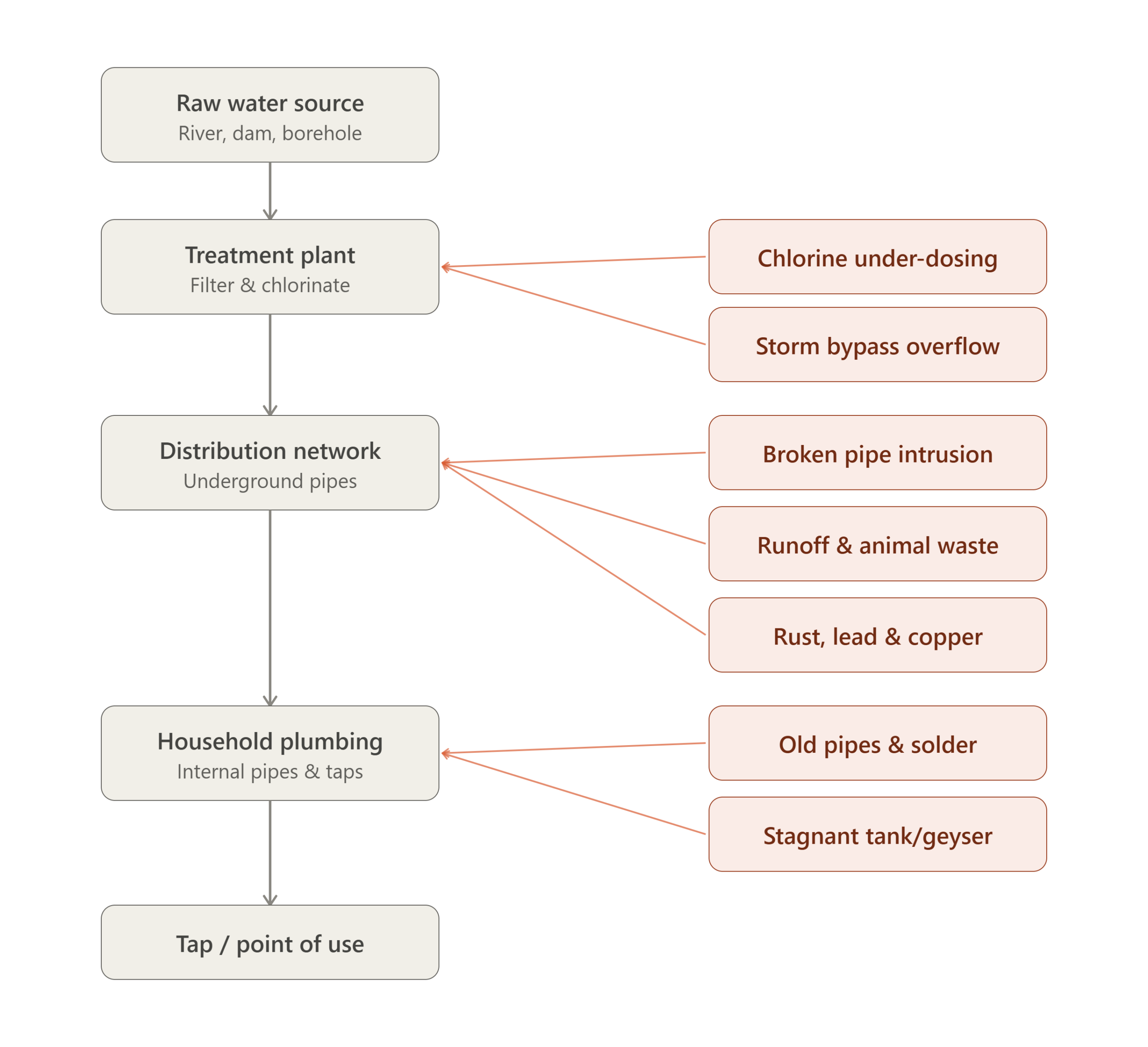
    This deterioration is largely due to aging infrastructure, neglected treatment plants, and lack of maintenance — problems that affect even urban areas once considered safe. Officials have admitted that the country is facing a “water crisis” due to these systemic issues.
    (SowetanLIVE – SA in a water crisis)

    For businesses and households alike, this means routine water testing is no longer optional. Regular SANS 241 water tests can detect contamination early and protect plumbing, health, and compliance standards.
    You can schedule a professional water test at www.sanswater.co.za.

    Citizen Science vs. Municipal Data: A Growing Trust Gap

    Interestingly, a tug-of-war has emerged between government and independent water testers. In some areas, results from citizen science projects differ sharply from official municipal data, creating confusion and mistrust.

    For example, the City of Cape Town recently disputed findings in the Project Blue Report, arguing that independent tests painted an unfairly negative picture.
    (IOL – City disputes water quality discrepancies)

    However, such debate only highlights how transparent, accredited, and consistent testing — like that performed under SANS 241 — is vital to restoring public confidence. Trusted providers such as SANS Water work directly with SANAS-accredited laboratories to ensure results meet the highest national standards.

    Why Testing Matters for Health, Education, and Rights

    Unsafe water doesn’t only cause illness. It affects school attendance, learning outcomes, and even gender equality — as girls often miss school when sanitation and hygiene are inadequate. The human rights implications are profound, and every unsafe tap is a barrier to opportunity.

    There’s growing pressure for legal accountability too. Municipalities that fail to provide safe water could face criminal charges under the Water Services Act.
    (IOL – Criminal charges laid over unsafe water)

    Taking Action: How to Protect Your Water Source

    The good news? Solutions are available. Whether your water comes from a borehole, JoJo tank, or municipal supply, regular SANS 241 water testing is your best defense against contamination.

    Start by scheduling a professional water test today through SANS Water. They offer comprehensive testing for:

    • Drinking and household water
    • Borehole and groundwater
    • Storage and tank systems
    • Effluent and discharge compliance

    Don’t wait for a crisis — act now to ensure your water meets the safety standards South Africa depends on.

    www.sanswater.co.za

    Email Mike@sanswater.co.za

  • Easy To Test Your Drinking Water With Our Water Test Kit

    Easy To Test Your Drinking Water With Our Water Test Kit

    The Easiest Way to Test Water for Your Business and Home

    Have you recently found yourself wondering, “How can I test my own water?” Whether you manage a commercial facility (compliance) or simply want to ensure your family’s safety, knowing exactly what flows through your taps is essential. Fortunately, ensuring your supply is safe has never been more straightforward.

    Why You Need a Reliable Drinking Water Testing Kit

    Water quality can fluctuate due to aging infrastructure, municipal supply issues, or environmental factors. Therefore, relying solely on visual checks is simply not enough. A professional-grade drinking water testing kit provides absolute certainty. Furthermore, it empowers you to take control of your health and corporate compliance without requiring any specialized training.

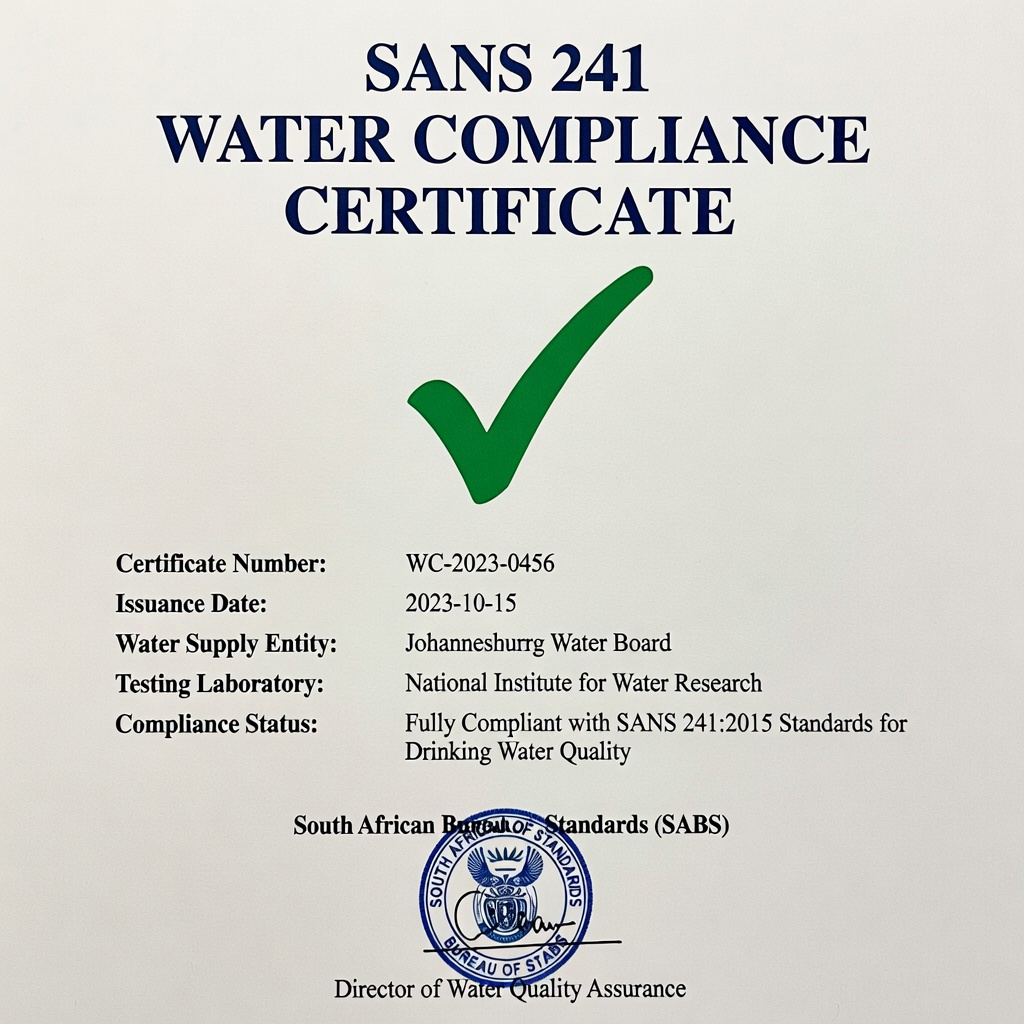
    Gemini_Generated_Image_1jl6on1jl6on1jl6

    Seamless Logistics: Order a Water Testing Kit Today

    In the past, getting a comprehensive laboratory analysis required complicated logistics and frustrating travel. Now, we have developed the Easiest way to test water. SANS Water delivers a complete, hassle-free solution directly to your location.

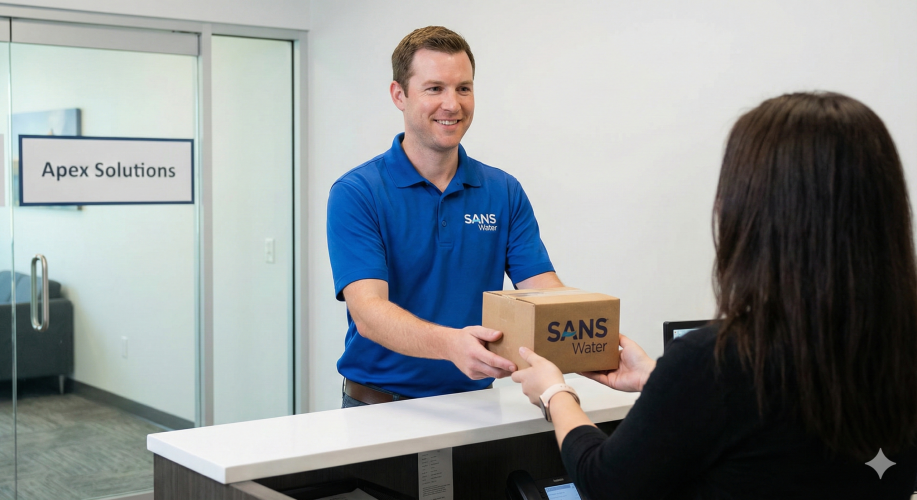
    To begin with, you simply order a water testing kit through our online platform. Subsequently, we will dispatch the water test kit straight to your front door.

    Using Your DIY Water Testing Kit

    Once your DIY water testing kit arrives, there is absolutely no rush. You can fill the provided sample bottles entirely in your own time. This built-in flexibility is exactly what makes our system so incredibly convenient for busy homeowners and facility managers alike.

    After you have successfully collected your samples, simply let us know. We will then arrange for a courier to collect the water quality sample kit directly from your premises. Consequently, you never have to worry about driving to a laboratory or handling complicated shipping labels. We manage the entire chain of custody for you.

    What Makes This The Best Water Testing Kit?

    Once collected, your samples are securely transported to our advanced testing facility. Within approximately 7 to 9 working days, your comprehensive analysis will be ready.

    However, we don’t just hand you a confusing scientific spreadsheet. You will receive a fully recognized SANS 241 potability SANAS Accredited certificate. Additionally, we provide a detailed supporting report that clearly explains all the relevant determinants in plain language. Because of this thorough, user-friendly approach, our clients consistently rate ours as The best water testing kit available in South Africa.

    Testing your supply truly could not be easier. Secure your peace of mind and ensure your water is safe by visiting SANS Water today.

    Contact Mike: 0844004300
    mike@sanswater.co.za


    © 2025 SANS Water | All rights reserved | Terms and Conditions | Design and development done by mikehastiedigital.com.

    A SANS 241 Water Test is a must for any household or business to ensure safe water and prevent future damage to the property.

    +27 (0) 21 788 1302 | mike@sanswater.co.za
    50 Promenade Road, Lakeside, Cape Town, South Africa

  • The Easiest Way To Test Your Water.

    The Easiest Way To Test Your Water.

    It Is Now Really Easy To Get Your Water Laboratory Tested!

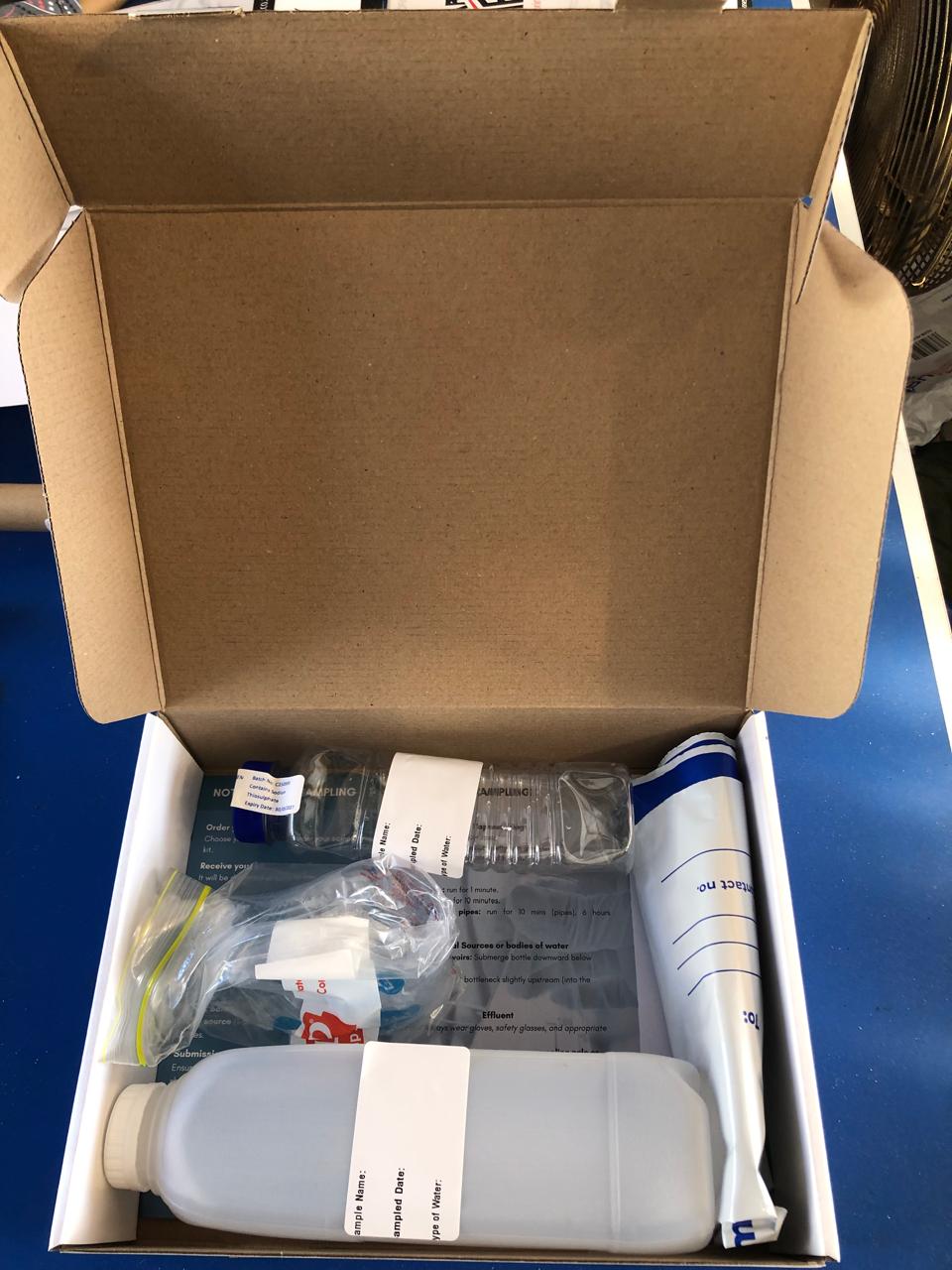
    It is now exceptionally easy to get your water, laboratory tested. You don’t even need to leave your home or business to get a full SANS 241 certificate and…peace of mind. We send you a testing kit, you fill it with the water, from the source you want to test and then we collect it from you and take it to the laboratory.

    Once tested, we issue you with a full SANS 241/ SANAS Accredited certificate.

    Water is the foundation of life, yet we often take its quality for granted. Whether you rely on a municipal supply, a borehole, or a rainwater harvesting system, ensuring your water is safe for consumption and household use is absolutely critical. However, knowing that you should test your water and actually getting it done are two different things.

    If you have ever found yourself wondering about the easiest way to test my water, you are in the right place. In this article, we will explore the critical benefits of water analysis and introduce a seamless, hassle-free solution that brings the laboratory directly to your doorstep.

    Need easy water testing? SANS Water delivers a water testing kit directly to your door. Get fast, SANAS Accredited lab results anywhere in South Africa.

    The Hidden Dangers: Why Test Your Water?

    Many people assume that clear, odorless water is perfectly safe. Unfortunately, this is a dangerous misconception. The primary reason why test your water should be a top priority is that some of the most harmful contaminants are entirely invisible to the naked eye.

    Furthermore, groundwater and municipal lines can easily become compromised by agricultural runoff, aging infrastructure, or heavy metal leaching. Without proper testing, you could unwittingly expose your family or business to:

    • Harmful Pathogens: Bacteria like E. coli and coliforms that cause severe gastrointestinal illness.
    • Heavy Metals: Elevated levels of iron, manganese, or lead that can cause plumbing damage and pose serious long-term health risks.
    • Chemical Imbalances: Highly acidic or alkaline water that destroys your pipes, geysers, and expensive appliances from the inside out.

    Therefore, regular testing is not just a precaution; it is a vital necessity for safeguarding your health and protecting your property. For a deeper understanding of global drinking water standards, you can review the World Health Organization’s guidelines on water quality.

    The Challenge: Why Traditional Testing is a Hassle

    Despite knowing the risks, many homeowners and businesses put off water testing. Why? Because historically, it has been a deeply inconvenient process.

    First, you have to source sterile bottles. Next, you have to figure out how to take the sample correctly without contaminating it. Ultimately, the biggest hurdle is the logistics. Taking time out of your busy day to drive a water sample across town—or to a different city entirely—before the lab closes is simply not feasible for most people due to location and time constraints.

    The Solution: SANS Water Makes It Effortless

    At SANS Water, we believe that safeguarding your water supply shouldn’t require taking a day off work. Consequently, we have revolutionized the process to provide truly easy water testing for clients all over the country. We bring the testing facility to you.

    If you are looking for the best place to test my water, look no further. Here is how our frictionless process works:

    1. We Deliver to Your Door: Once you place an order, we courier a sterile water testing kit directly to your home or business.
    2. Simple Sampling: Inside the kit, you will find two specialized bottles. Simply fill them from the source you want to test (such as your kitchen tap or borehole).
    3. We Collect It: You don’t need to drive anywhere. We will send a courier to pick up the filled bottles directly from your premises.
    4. Direct to the Lab: We transport your samples immediately to one of our 10 SANAS Accredited laboratories located around the country, ensuring the integrity of the sample is maintained.

    Fast, Reliable Results You Can Understand

    After your sample reaches the lab, the turnaround time is exceptionally fast—taking approximately 7 to 9 working days. Once the analysis is complete, we don’t just hand you a confusing spreadsheet of chemical jargon.

    Instead, you will receive a formal, comprehensive SANS 241 / SANAS Accredited certificate detailing the exact composition of your water. In addition to this, we provide a supporting, easy-to-read report that explains exactly what your results mean in plain English.

    Moreover, if your water fails to meet safety or aesthetic standards, we do not leave you to figure out the solution alone. Our experts will guide you through the best filtration, purification, or treatment methods to counter any negative results, ensuring your water is pristine, safe, and compliant.

    Secure Your Water Quality Today

    Ultimately, protecting your health and plumbing infrastructure has never been this simple. By removing the logistical headaches of visiting a laboratory, SANS Water provides the most convenient and comprehensive service in the country.

    Ready to take the guesswork out of your water quality? Experience the convenience of our nationwide service today. To order your kit or speak with Mike and our expert team, visit SANS Water or contact us directly at 084 400 4300.

    © 2026 SANS Water | All rights reserved | Terms and Conditions | Design and development by MikeHastieMedia.

    +27 (0) 21 788 5163 | mike@sanswater.co.za
    50 Promenade Road, Lakeside, Cape Town, South Africa

  • Turn Your Borehole into a Profitable Startup

    Turn Your Borehole into a Profitable Startup


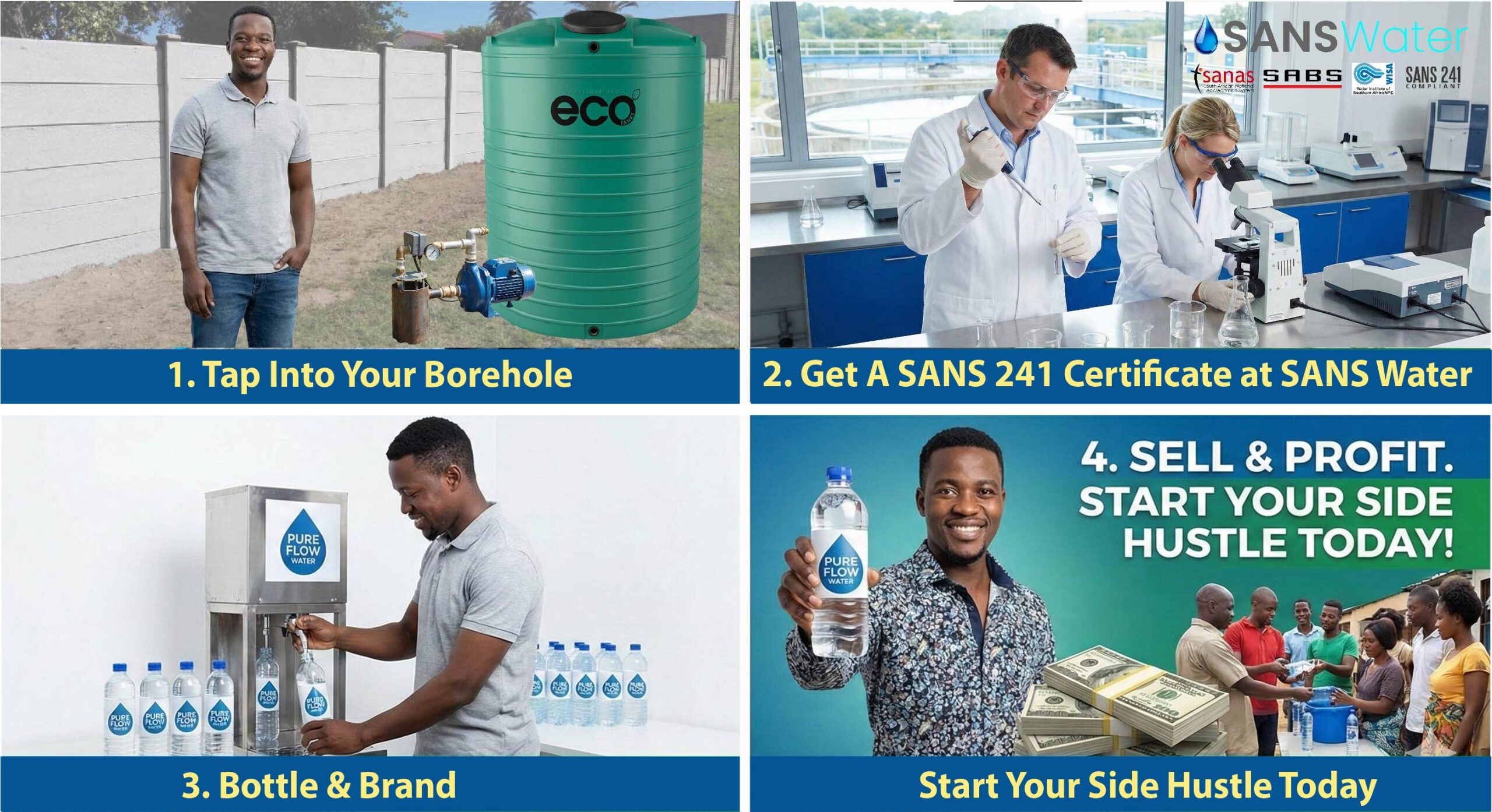
    Why Filtered Water is the Ultimate Side Hustle in South Africa

    South Africa is currently facing an unprecedented water crisis. Consequently, with an estimated R400-billion maintenance backlog, our national water infrastructure is crumbling. Old, out-of-date municipal pipes are constantly bursting, leaving entire suburbs high and dry for days or even weeks. Furthermore, with the looming threat of imminent drought, clean water is rapidly becoming an increasingly scarce commodity.

    However, where there is a crisis, there is also an opportunity to provide a vital solution.

    If you have access to a borehole, you are sitting on liquid gold. Drawing raw groundwater is an excellent first step, but to make it safe, consumable, and sellable, you must put it through a proper filtration process.

    Because clean, reliable drinking water is a non-negotiable daily need, it is a product that will always sell. Therefore, purifying your borehole water opens the door to an incredibly lucrative startup or side hustle. By supplying safe, bottled, or bulk drinking water to your friends, family, and local community, you can earn good money and build a reliable, recession-proof stream of permanent income.

    The Crucial Step: Compliance and Certification

    Before you can confidently sell a single drop of water to your network, you must legally and ethically guarantee its safety. This is where professional Water testing becomes your most important business asset.

    SANS 241 is the mandatory South African National Standard for drinking water quality. Achieving a SANS 241 certificate proves beyond a doubt that your filtered borehole water is completely free from harmful bacteria (like E. coli), dangerous chemical concentrations, and aesthetic impurities.

    Why Choose SANS Water?

    At SANS Water, we provide rigorous, SANAS accredited testing to ensure your borehole supply meets all legal and health requirements under the SANS 241 standard. Moreover, when you test with us, you are in excellent company. We are trusted by industry leaders and currently test water for heavyweights like KFC, BIDFoods, Civils 2000, Medi Clinic, Malans Dairy, and many other big names.

    If they trust us with their compliance, you can trust us with your new business venture.

    Ready to get started? For more information, call or WhatsApp Mike on 0844004300 or go to www.sanswater.co.za.

  • The Advantages of Using Filtered Ground Water in Your Home

    The Advantages of Using Filtered Ground Water in Your Home

    The Advantages of Using Filtered Ground Water in Your Home

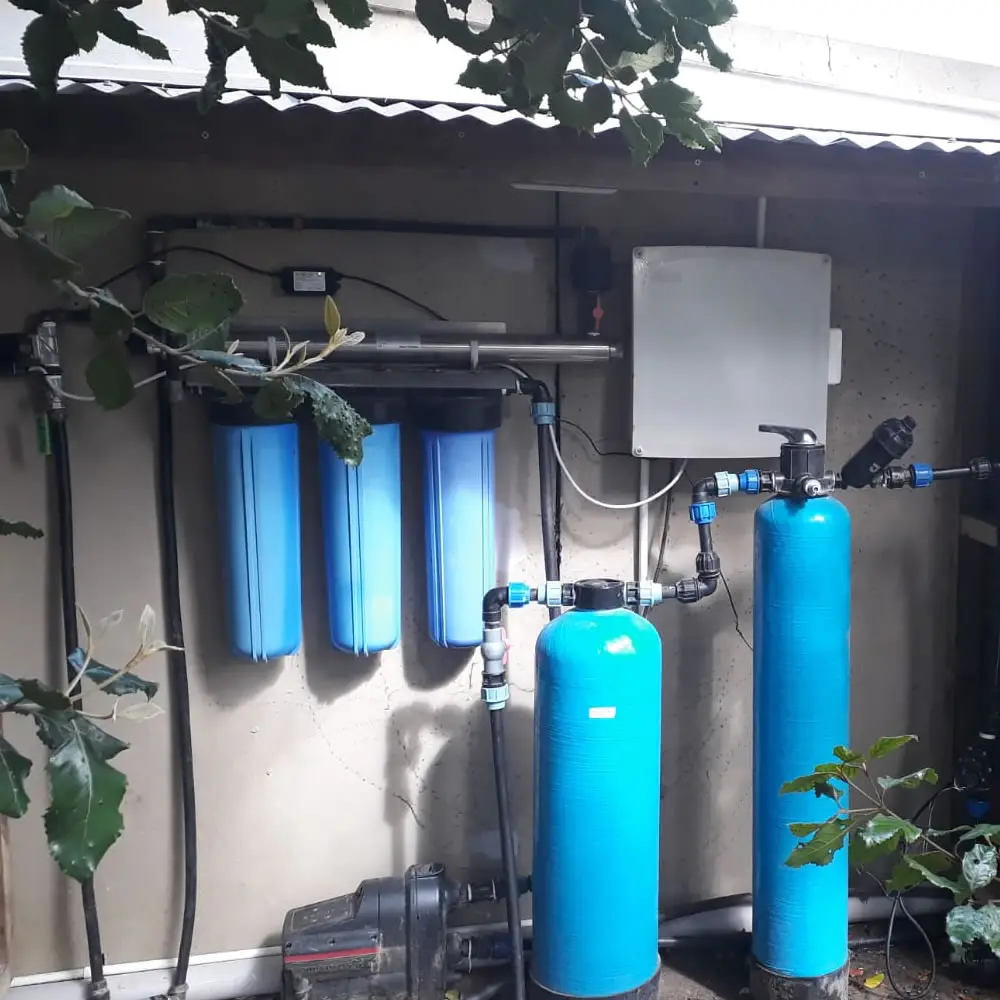
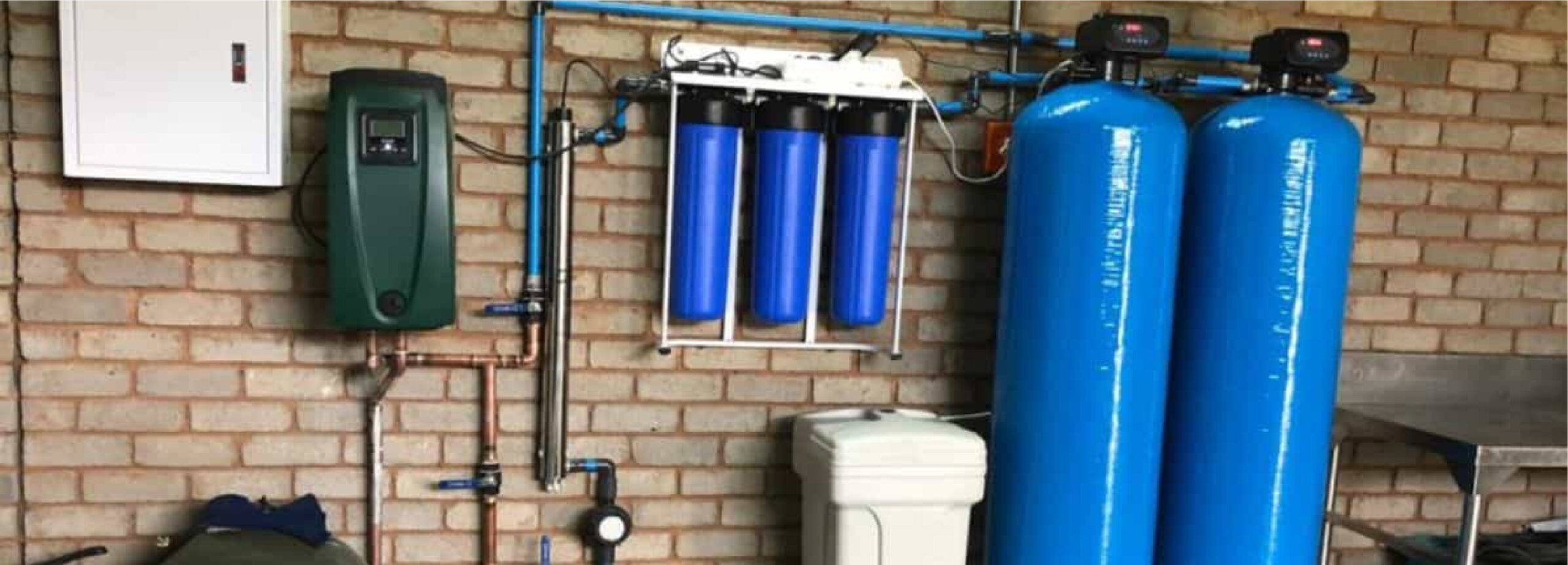
    Clean water is essential for every household. However, ground water often contains impurities that can affect your health and appliances. Filtering ground water with the right technology provides significant benefits. In this blog, we will explore the advantages of using filtered water, especially when you invest in a whole house filtration system. Moreover, we’ll look at key components like sediment filters, activated carbon block, and UV sterilisation that make a real difference.

    Why You Should Consider Filtering Ground Water

    First and foremost, ground water may contain iron, sediment, and other particles that make your water unsafe or unpleasant. Without proper filtration, these elements can clog your plumbing and reduce water quality. However, by implementing a whole house filtration system, you ensure every tap in your house delivers cleaner, safer water.

    Better Taste and Odour

    One of the most immediate benefits of filtered water is its improved taste and smell. With processes like activated carbon block filtration, unwanted chemicals and odours are removed. Accordingly, this makes your drinking and cooking water far more enjoyable.

    Health Benefits with UV Sterilisation

    Next, there’s the issue of microbial contamination. Many ground water sources contain bacteria, viruses, and other microorganisms. Incorporating UV sterilisation into your filtration solution effectively neutralises these pathogens. As a result, your family drinks water that’s not only cleaner but also safer.

    Key Components of an Effective Filtration System

    To fully enjoy the advantages of filtered ground water, certain technologies are essential.

    Sediment Filters

    First, sediment filters remove large particles like rust, sand, and dirt. These filters act as the first line of defense in a whole house system. Thus, they help protect downstream components and prolong their lifespan.

    Activated Carbon Block

    Second, activated carbon block filters absorb chlorine, pesticides, and organic contaminants. Consequently, this significantly improves water taste and quality. Additionally, carbon filtration reduces stubborn odours that can linger in untreated water.

    Iron Removal

    Ground water often contains high levels of iron. Without proper treatment, iron can stain laundry and fixtures. Iron removal systems ensure that your water is aesthetically pleasing and prevents damage to appliances over time.

    Booster Pump

    Moreover, as you add layers of filtration, water pressure can decrease. That’s where a booster pump becomes invaluable. It ensures consistent water pressure throughout your home, maintaining convenience and comfort.

    Why a Whole House Filtration System Matters

    Unlike point-of-use filters, a whole house filtration system treats water at the entry point. Therefore, every outlet in your home delivers filtered water—from the kitchen to the bathroom and beyond. This comprehensive approach protects your family and your plumbing infrastructure.

    Adding such a system also reduces the need for bottled water. Consequently, you save money and reduce plastic waste, making it a responsible choice for the environment.

    Trust the Experts

    For tailored filtration solutions and professional installation, visit San’s Water Solutions. They offer expert guidance on choosing the right configuration for your home. Whether you need sediment filters, UV sterilisation, iron removal systems, or a complete whole house setup, their team has you covered.

    Learn more about advanced water solutions at San’s Water.

    Final Thoughts

    In summary, filtering ground water elevates your home’s water quality in every way. From better taste and smell to improved health and appliance protection, the advantages are clear. With technologies like sediment filters, activated carbon block, and UV sterilisation, combined with enhancements like a booster pump, you can enjoy reliable access to pure, safe water throughout your home.

  • How to Save Water in South Africa: Practical Tips for Every Household

    How to Save Water in South Africa: Practical Tips for Every Household

    How to Save Water in South Africa: Practical Tips for Every Household

    South Africa is a water-scarce country, and with rising demand and ongoing drought conditions in many regions, every drop truly counts. Learning how to save water is no longer just good practice—it’s a necessity. In this blog, you’ll discover simple, effective ways to reduce your water usage at home, understand the value of water testing, and know where you can test your water to ensure it’s safe.

    In addition, we’ll show you why getting your water tested through SANS Water (https://www.sanswater.co.za) is a smart and accessible option for every South African household and business.


    Why Saving Water Matters in South Africa

    South Africa faces ongoing water challenges due to drought cycles, population growth, aging infrastructure, and climate change. Because of this, it’s essential for residents, schools, farms, lodges, and businesses to adopt water-saving habits. Fortunately, many changes are easy to implement, cost-effective, and offer long-term benefits.


    Practical Tips to Save Water at Home

    1. Reduce Water Usage in the Bathroom

    The bathroom is where most household water is used. To cut down:

    • Take short showers and avoid baths whenever possible.
    • Install low-flow showerheads to reduce water flow without losing pressure.
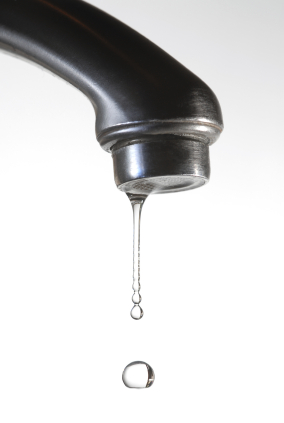
    • Fix leaking taps immediately—just one drip per second wastes thousands of litres per year.
    • Put a weighted bottle or displacement device in the toilet cistern to reduce water used per flush.

    2. Save Water in the Kitchen

    Even small adjustments can make a difference:

    • Wash vegetables in a bowl instead of under a running tap.
    • Repair leaky pipes under sinks.
    • Only run the dishwasher when it’s full.
    • Reuse greywater for plants or cleaning outdoor areas.

    3. Smart Outdoor Water Saving

    Gardens and outdoor areas often consume large amounts of water. Try:

    • Watering before 9 AM or after 5 PM to reduce evaporation.
    • Planting indigenous, drought-resistant plants.
    • Using mulch to retain soil moisture.
    • Installing rainwater tanks to collect and store rainwater for garden use.

    4. Improve Water Storage and Filtration

    If you store borehole, rainwater, or municipal backup water, ensure tanks and systems are:

    • Cleaned regularly
    • Protected from contamination
    • Properly sealed to prevent leaks and mosquito breeding

    This leads to our next essential area—water testing.


    Why Should I Test My Water?

    Whether you drink municipal, rainwater, borehole, river, or filtered water, water testing is crucial. Many people assume that clear water is safe—but harmful contaminants can be invisible, tasteless, and odourless.

    Testing your water helps you:

    • Identify bacteria, nitrates, heavy metals, and chemical contaminants
    • Determine whether your filtration system is working
    • Know if your water is SANS 241 compliant
    • Protect your family’s health
    • Ensure that stored or borehole water is truly potable

    Because water quality varies greatly between regions in South Africa, professional testing is the only reliable way to know if your water is safe.


    Where Can I Test My Water?

    If you’re wondering “where can I test my water?” or “where can I get my water tested?”, the answer is simple:
    You can get your water professionally tested anywhere in South Africa through SANS Water.

    SANS Water offers:

    • Full SANS 241 water safety testing
    • Borehole water analysis
    • Drinking water quality reports
    • Microbiological and chemical testing
    • Expert recommendations on treatment options

    Internal Link: Learn more or book a test at: https://www.sanswater.co.za
    Outbound Link: Explore South Africa’s water-safety standards: https://www.gov.za/documents/national-standard-drinking-water-sans-241

    No matter if you’re in Johannesburg, Durban, or doing water testing Cape Town, SANS Water makes the process simple, accessible, and fast.


    The Connection Between Water Saving and Water Testing

    Saving water and ensuring it is safe go hand in hand. When water is scarce, many people rely on:

    • Borehole water
    • Tank water
    • Rainwater systems
    • River or dam water

    While these are excellent ways to save and store water, they can also introduce contamination risks. This is exactly why professional water testing is essential for responsible water use.


    Final Thoughts

    South Africans can play a powerful role in protecting our country’s water resources. By adopting smart water-saving habits, regularly maintaining your systems, and making sure your water is safe through proper testing, you help build a more secure and sustainable future.

    If you are asking “why should I test my water?”, the answer is simple:
    Because safe water is essential—and you can only know it’s safe if you test it.

    Get your water tested today with SANS Water:
    👉 https://www.sanswater.co.za

  • Essential Guide to Water Testing in Cape Town: Is Your Water Safe?

    Essential Guide to Water Testing in Cape Town: Is Your Water Safe?

    Essential Guide to Water Testing in Cape Town: Is Your Water Safe?

    Are you concerned about the quality of the water flowing from your tap, borehole, or wellpoint in the Mother City? You’re not alone. Following the recent water concerns, more residents are asking a critical question: Should I test my water? The simple answer is yes, especially if you rely on a non-municipal source or just want complete peace of mind.

    This comprehensive guide will walk you through the importance of professional Water Testing Cape Town, the gold standard of compliance, and exactly where can I test my water.

    Why Water Testing is Crucial for Cape Town Residents

    Cape Town’s water comes from a complex system of dams, rivers, and, for many private homes, boreholes. While the city’s municipal water generally meets high standards, water quality can be affected by factors like pipe corrosion, groundwater contamination, or changes in catchment health.

    Testing your water helps you:

    Protect Your Health: Unseen contaminants like E. coli, heavy metals (such as lead), and nitrates can pose serious health risks, particularly to children and the elderly. A professional test provides a definitive safety assessment.

    • Prevent Property Damage: Water that is too corrosive or contains high levels of certain minerals can damage your plumbing, geysers, and appliances, leading to costly repairs over time.
    • Verify Borehole/Wellpoint Safety: If you use private groundwater, regular testing is non-negotiable. Boreholes in areas like Constantia, for example, can be susceptible to localised contamination from septic tanks or agricultural run-off.
    • Ensure Compliance: For commercial or industrial use, and even in some residential cases, complying with national standards is a legal and ethical necessity.


    The Gold Standard: SANS 241 and SANAS Accreditation

    When looking for a reliable water testing service, you must look for two key accreditations: SANS 241 and SANAS Accredited testing.

    What is SANS 241?

    The SANS 241:2015 is the South African National Standard for Drinking Water Quality. It is the national benchmark that sets the minimum requirements for potable water to be considered safe for human consumption. It covers everything from:

    • Microbiological Determinands: Such as E. coli and Total Coliforms, which indicate the risk of waterborne diseases.
    • Chemical Determinands: Including heavy metals, nitrates, and fluoride, which pose chronic health risks.
    • Aesthetic Determinands: Such as pH, colour, and turbidity (cloudiness).

    If your water meets the SANS 241 requirements, you can be assured it is safe to drink. To learn more about these critical standards, visit the dedicated water quality section on www.sanswater.co.za.

    Why Does SANAS Accreditation Matter?

    SANAS (South African National Accreditation System) accreditation means the laboratory performing the test has been independently verified to be technically competent and operates according to international quality standards (ISO/IEC 17025).

    A laboratory that offers a SANAS Accredited SANS 241 test ensures the results are accurate, legally defensible, and reliable—essential for making informed decisions about your water.


    Where Can I Test My Water? 

    If you are wondering where can I test my water, the best course of action is to use a specialist laboratory service that is equipped to handle complex chemical and microbiological analysis.

    Finding a High-End Specialist

    For high-end, legally compliant, and peace-of-mind testing, you need a provider that specialises in the SANS 241/SANAS accredited standards.

    SANS Water is a dedicated specialist that offers exactly this service. They focus on delivering reliable, professional water testing, which includes full chemical and microbiological analysis packages.

    Where Can I Test My Water if I’m in Cape Town?

    Whether you are in Constantia, Bishopscourt, Claremont, Tokai, Wynberg ,the Southern Suburbs, or the City Bowl, the process for a professional test remains straightforward:

    1. Contact the Specialist: You would reach out to a provider like SANS Water.
    2. Request a Test Package: Specify the source of your water (municipal tap, borehole, tank) and its intended use (drinking, irrigation). A SANS 241 package is usually recommended for drinking water.
    3. Sample Collection: The service often involves professional collection of your water sample to ensure it’s done correctly and prevent contamination—a crucial step for an accurate microbiological result.
    4. Accredited Lab Analysis: The sample is sent to a SANAS-accredited laboratory for the full SANS 241 spectrum analysis.
    5. Receive Your Report: You receive a detailed report with clear pass/fail results against the SANS 241 limits.


    Take the Next Step for Water Safety

    Don’t leave the quality of your family’s water to chance. Knowing precisely what is in your water is the first and most important step towards ensuring its long-term safety and protecting your property.

    To get a quote or to book a professional, SANAS-accredited Water Testing Cape Town service, you can reach out to Mike at SANS Water.

    Contact SANS Water Today

    Take control of your water quality today and gain the peace of mind you deserve.

  • Why & How To Cover Your Back When It Comes To Your Water Quality

    Why & How To Cover Your Back When It Comes To Your Water Quality

    Why & How To Cover Your Back When It Comes To Your Water Quality

    FACT: 90% of people that enter your business premises will at some stage come into contact with or use your water!

    …and when you have no proof of the quality of your water you run the risk of a staff member, client or visitor turning around and claiming they got sick due to the water on your premises.

    This can not only be costly if they choose to take action but also cause you down time and most certainly your reputation.

    So, how do you cover your back when it comes to water quality?

    Simple

    By getting a basic SANS 241 water test and certificate that states your water complies with the South African National Standard of water. If you have this, you have irrefutable proof that your water is 100% safe and you are safe from any claims or allegations.

    So How?

    SANS Water offers SANS 241, SANAS Accredited water testing—the gold standard for water quality analysis in South Africa. Their process is simple:

    1. They come to you – A qualified technician collects the water sample directly from your site.
    2. Samples go straight to the lab – This ensures there’s no contamination or temperature variation that could skew results.
    3. You receive a comprehensive report – The report clearly explains both the chemical and microbiological findings, along with practical advice on how to improve or maintain your water quality.

    Book your water test today with SANS Water and take the first step toward peace of mind.

    By scheduling regular water testing, you’re not only preventing these problems—you’re also demonstrating professionalism and accountability.

    Other Pitfalls of Ignoring Water Testing

    Failing to test your water regularly can open the door to a range of issues, including:

    • Health hazards – Bacteria like E. coli or high nitrate levels can pose serious risks to human health.
    • Equipment damage – Hard or corrosive water can shorten the lifespan of boilers, coffee machines, and filtration systems.
    • Compliance problems – Outdated or missing water certificates can lead to failed audits, fines, or loss of food safety certification.

    By scheduling regular water testing, you’re not only preventing these problems—you’re also demonstrating professionalism and accountability.

    Experience You Can Trust

    When it comes to something as essential as water, experience matters. Michael Hastie, owner of SANS Water, brings over 12 years of experience in water testing and quality management. He works closely with some of the biggest SANAS-accredited laboratories in South Africa, ensuring every test is reliable and compliant.


    Michael personally assists clients in interpreting test results, explaining chemical and microbiological markers, and providing tailored solutions to improve water quality. This one-on-one guidance helps businesses make informed decisions—whether they need filtration, softening, or disinfection.


  • Water Testing For Corrosive Water

    Water Testing For Corrosive Water

    Cape Town is facing a serious water quality concern that homeowners and businesses can no longer afford to ignore. We are seeing unprecedented low LSI (Langelier Saturation Index), low alkalinity, and very soft water across the city. According to Mike Hastie from SANS Water—who works directly with the leading SANAS accredited laboratories in the Western Cape—this situation is alarming and needs immediate attention.

    Why Low LSI, Alkalinity, and Soft Water Are a Problem

    Water that is too soft and low in alkalinity can become highly corrosive, attacking copper pipes, geysers, fittings, and appliances from the inside out. Over time, this leads to:

    • Leaks and bursts in plumbing systems
    • Damage to appliances such as dishwashers, washing machines, and geysers
    • Costly repairs and replacements for both homeowners and businesses
    • Potential health risks if metals like copper or lead leach into drinking water

    Transitioning from one problem to the next, the risks only multiply if left unchecked. That is why now, more than ever, a proper water test is absolutely essential.

    Why You Must Test with a SANAS Accredited Laboratory

    Many people think a simple, over-the-counter strip test will do the job. However, these basic kits miss critical parameters like LSI, alkalinity, and hardness. To get an accurate picture of your water quality, you need to work with a SANAS accredited laboratory.

    This ensures:

    • Reliable and certified results
    • Testing for all important parameters, not just pH
    • Professional interpretation of what the results mean for your water system

    As Mike Hastie stresses, “This is not a drill—Cape Town residents need to take action before serious damage occurs.”

    Take Action Now

    Getting a water test from a SANAS accredited laboratory is simple. Reach out to SANS Water and book your test. Mike and his team will guide you through the process, take samples correctly, and ensure your results are analyzed by the top SANAS labs in the Western Cape.

    Waiting until your pipes burst or your geyser fails will cost far more than a proactive test. Transition words aside, the bottom line is clear: prevention is cheaper than repair.

  • Managing Effluent Water Testing

    Managing Effluent Water Testing

    Testing Your Effluent Water

    Effluent water testing is one of the most important responsibilities for any business that produces wastewater. Whether you run a manufacturing plant, food-processing facility, hospital, or commercial building, the water leaving your premises can have a huge impact on plumbing systems, sewer networks, municipal treatment plants, and the natural environment.

    Ignoring this responsibility can lead to costly repairs, regulatory fines, and even reputational damage. On the other hand, regular effluent water testing helps ensure compliance, protects infrastructure, and demonstrates your company’s commitment to sustainability.

    In this guide, we’ll break down why effluent water testing is so critical, what it involves, and how your business can benefit from making it a priority.


    What is Effluent Water?

    Effluent water is wastewater discharged from an industrial, commercial, or domestic source into sewer systems, rivers, or treatment plants. It often contains:

    • Oils, fats, and grease
    • Chemicals and solvents
    • Heavy metals
    • Pathogens and bacteria
    • Suspended solids
    • Excess nutrients (such as nitrates and phosphates)

    Without proper testing and treatment, these contaminants can harm both infrastructure and the environment.


    Why Effluent Water Testing is Important

    1. Protecting Plumbing and Sewer Systems

    Untested effluent can corrode pipes, clog drains, and damage sewer systems. For example:

    • Oils and grease solidify in pipes, creating blockages.
    • Acidic wastewater corrodes plumbing fixtures.
    • Heavy solids settle in sewers, increasing maintenance costs.

    By conducting regular effluent water testing, businesses can identify these risks early and take corrective measures, saving thousands in potential repairs.


    2. Safeguarding the Environment

    Effluent water that contains harmful substances can leak into rivers, lakes, or soil, disrupting ecosystems. Studies show that untreated wastewater contributes to 80% of global water pollution (UNESCO).

    Testing ensures that contaminants are identified and removed before discharge, protecting:

    • Aquatic life from toxic chemicals
    • Soil health from heavy metal accumulation
    • Communities relying on groundwater

    This not only reduces environmental damage but also strengthens your company’s sustainability credentials.


    3. Reducing Strain on Municipal Refineries

    Municipal treatment plants are designed to process normal levels of waste. If industrial effluent is too contaminated, it places unnecessary strain on refineries, increasing energy consumption and operational costs.

    With effluent water testing, businesses can pretreat wastewater on-site before releasing it, reducing the burden on local infrastructure and ensuring compliance with discharge permits.


    4. Compliance with Regulations

    In South Africa, effluent water must comply with SANS 241 standards for safety and quality. Businesses that fail to test or treat their wastewater risk:

    • Heavy fines
    • Legal action
    • Business license suspension

    By scheduling regular effluent water testing with a trusted provider such as SANS Water, companies can ensure full compliance with national regulations.


    5. Protecting Your Business Reputation

    Today’s consumers and investors are increasingly concerned about sustainability. Businesses that neglect their wastewater responsibilities may face reputational damage, while those that demonstrate responsible water management often enjoy stronger customer loyalty.

    Effluent water testing signals that your company cares about community health, environmental protection, and long-term sustainability.


    How Effluent Water Testing Works

    Effluent water testing involves collecting wastewater samples and analyzing them for a variety of parameters, including:

    • pH and alkalinity (to check corrosiveness)
    • Chemical Oxygen Demand (COD) and Biological Oxygen Demand (BOD) (to measure organic pollution)
    • Turbidity and suspended solids
    • Heavy metals (lead, mercury, cadmium, etc.)
    • Microbial contamination (E. coli, coliforms, and pathogens)

    Results are compared against regulatory limits to determine whether pretreatment or corrective measures are needed.


    The Business Benefits of Effluent Water Testing

    Beyond compliance and environmental protection, businesses gain several advantages from routine testing:

    • Cost savings – Preventing pipe blockages, corrosion, and expensive downtime
    • Risk reduction – Avoiding regulatory penalties and lawsuits
    • Operational efficiency – Maintaining smooth wastewater flow and reducing sewer maintenance issues
    • Sustainability branding – Demonstrating environmental responsibility to customers and stakeholders


    FAQs About Effluent Water Testing

    How often should effluent water be tested?

    Testing frequency depends on the type of industry and volume of wastewater generated. For high-risk sectors such as food processing or manufacturing, monthly or quarterly testing is recommended.

    What happens if my effluent fails the test?

    If results show contamination beyond legal limits, corrective actions such as on-site treatment, chemical dosing, or process adjustments will be required before further discharge.

    Who can carry out effluent water testing?

    Specialist companies like SANS Water provide professional effluent water testing services, ensuring compliance with SANS 241 and other relevant regulations.


    Take Action: Book Effluent Water Testing Today

    Effluent water testing is not just about avoiding fines—it’s about protecting your plumbing, local sewer systems, municipal refineries, and the environment. Every business has a responsibility to ensure their wastewater is safe, compliant, and sustainable.

    At SANS Water, our team provides professional testing, clear reporting, and practical solutions for businesses across South Africa. Contact us today to book your test and protect your business, infrastructure, and the environment.

    For further insights, you can also explore: