- Home
- Water Testing
- Filtration
- Pricing
- Our Articles
- Whole House Water Filtration System: Maintenance Guide
- The Benefits of Installing a Water Filtration System in Your Home
- The Hidden Journey of Water: Infrastructure, Quality and Risk
- Water Testing Before Water Filtration
- Water Compliance is Key
- Easy To Test Your Drinking Water With Our Water Test Kit
- The Easiest Way To Test Your Water.
- The Advantages of Using Filtered Ground Water in Your Home
- How to Save Water in South Africa: Practical Tips for Every Household
- Essential Guide to Water Testing in Cape Town: Is Your Water Safe?
- Why & How To Cover Your Back When It Comes To Your Water Quality
- SA Water Crisis
- Managing Effluent Water Testing
- SANS 241 Water Testing
- Why pH Isn’t Enough: The Hidden Danger Lurking in Your Water
- Businesses Need To Test Their Water
- Why You Need To Test Your Council Water
- Why Water Testing Is So Important
- Businesses Need A Water Audit
- It Is Vital To Maintain Your Filtration System
- Water Testing For Corrosive Water
- Contact Us
Is All Your Water SANS Compliant?
Why you need to be compliant
Water is fundamental to any business operation. Whether you’re running a restaurant, office, manufacturing facility, or healthcare provider, the quality of water you use directly impacts your success. which is why compliance is key. Water quality isn’t just about meeting regulatory requirements—it’s also about protecting your clients, staff, and reputation.
In South Africa, the SANS 241 standard sets the benchmark for drinking water quality, therefore compliance isn’t optional and consequently it is mandatory. Moreover, proving your compliance requires more than internal testing. Above all, you need a credible third party to validate your results.
Therefore, this blog explains why water compliance matters for your business. We’ll also show you why partnering with professionals like SANS Water is your best investment.
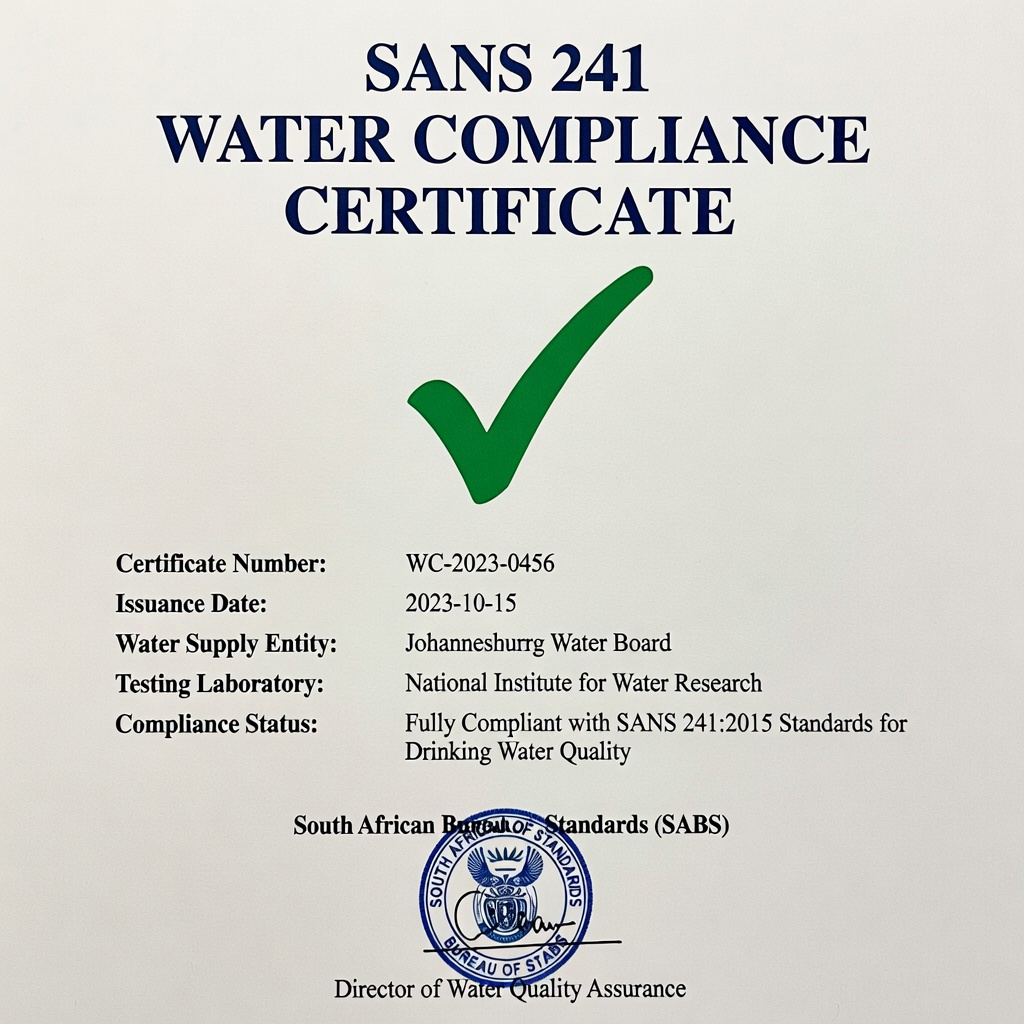
What is SANS 241?
SANS 241 is South Africa’s national standard for drinking water quality. In other words, the standard specifies limits for physical, chemical, and microbiological contaminants. Additionally, it ensures that water is safe for human consumption and use.
The SANS 241 standard covers:
- Microbiological safety
- Chemical safety
- Physical characteristics
- Radiological aspects
Consequently, any business providing water to staff or customers must comply. In other words, non-compliance can result in hefty fines, business closure, and serious health consequences.
Why Water Quality Matters for Your Business
Protecting Your Reputation
Above all, your business reputation depends on trust. When customers or staff discover water quality issues, they lose confidence immediately. Furthermore, negative reviews spread quickly on social media and review platforms.
In contrast, businesses with proven water quality standards build customer loyalty. They demonstrate responsibility and care.
Legal Requirements
South Africa’s health and safety regulations require businesses to provide safe drinking water. Therefore, compliance with SANS 241 is non-negotiable. Non-compliant businesses face:
- Regulatory fines
- Legal liability
- Potential closure orders
- Criminal charges in severe cases
Health and Safety
Contaminated water causes serious health problems which, for instance, include waterborne diseases, bacterial infections, and chemical poisoning. Consequently, your staff and customers rely on you to provide safe water.
Safe water also reduces sick leave, improves productivity, and demonstrates duty of care.
The Challenge: Internal Testing Isn’t Enough
Many businesses attempt to test their water internally. However, internal testing has significant limitations.
Problems with internal testing include:
- Lack of proper certification
- Inconsistent methodology
- Biased results
- No legal standing
- Insufficient equipment
Similarly, regulators and clients won’t accept internal results as proof of compliance. You need an independent, certified third party.
In other words, this is where professional water testing services become essential.
Why Third-Party Water Testing is Critical
Independent Verification
Third-party testing provides objective results, therefore the testing facility has no financial incentive to hide problems. Therefore, their results carry legal weight.
Moreover, third-party testing demonstrates your commitment to transparency. It shows clients and regulators that you take water safety seriously.
Professional Expertise
Professional water testing labs employ certified technicians. They understand SANS 241 requirements thoroughly. Additionally, they use calibrated equipment and follow strict protocols.
Furthermore, they know exactly what contaminants to test for. Above all, they understand how different industries have different water needs.
Comprehensive Reports
Professional testing provides detailed documentation. These reports explain:
- What was tested
- The methodology used
- Results with interpretation
- Compliance status
- Recommendations for improvement
Consequently, you have proof of compliance. You can confidently show these reports to regulators, clients, and insurance companies.
Legal Protection
In the event of a water-related incident, third-party testing protects you legally and above all it demonstrates due diligence. It shows you followed proper procedures.
Therefore, insurance companies prefer businesses with third-party testing records. This can also reduce your premiums.
Water Testing Methods and Equipment
Professional water testing uses several methods depending on requirements.
Microbiological Testing
This identifies bacteria, viruses, and other microorganisms. The testing involves culturing samples. Results take 24-48 hours.
Chemical Testing
This measures pH, chlorine levels, metals, pesticides, and other chemicals. Testing uses spectrometry and chromatography equipment.
Physical Testing
This assesses turbidity, color, taste, and odor. Physical tests provide initial water quality indicators.
The Water Testing Kit
Professional facilities don’t rely on basic water testing kits. Instead, they use sophisticated equipment. However, initial screening might use specialized water testing kit technology.
In addition, the quality of results depends on proper sample collection and handling.
Where to Get Professional Water Testing
Finding the Right Laboratory
So, who can test my water? Many laboratories claim to offer water testing. However, not all meet SANS 241 standards.
Look for facilities that are:
- SABS accredited
- ISO 17025 certified
- SANS 241 compliant
- Experienced in your industry
Why SANS Water Stands Out
SANS Water is South Africa’s leading water testing and compliance provider. Here’s why they’re the perfect choice:
Expertise and Certification
SANS Water employs certified water quality professionals. They understand SANS 241 requirements comprehensively. Their team stays updated on regulatory changes.
Comprehensive Testing Protocols
They test for all contaminants specified in SANS 241. Furthermore, they customize testing based on your industry and water source.
Advanced Laboratory Equipment
SANS Water uses state-of-the-art testing equipment. This ensures accuracy and reliability. Their facilities meet international standards.
Detailed Reporting
Reports from SANS Water are comprehensive and clear. They explain:
- Exactly what was tested
- Why each test matters
- How results affect your business
- Specific recommendations
Industry Experience
SANS Water has tested water for hospitals, restaurants, schools, manufacturing facilities, and municipalities. They understand industry-specific requirements.
Fast Turnaround Times
Above all, they provide quick results without compromising quality and therefore less business disruption.
Getting a SANS 241 Water Test
The Process
Step 1: Contact SANS Water
Visit www.sanswater.co.za to arrange your test. Describe your business type and water use. See our pricing.
Step 2: Sample Collection
SANS Water technicians collect samples following strict protocols. They use sterile containers and proper preservation methods. Samples are labeled and logged immediately.
Step 3: Laboratory Analysis
The samples go to SANS Water’s accredited laboratory. Technicians run all necessary tests. Results are carefully documented.
Step 4: Report Generation
You receive a comprehensive report. It includes all results, interpretations, and recommendations.
Step 5: Implementation
Based on results, you may need water filtration or treatment. SANS Water can recommend appropriate solutions.
Water Filtration and Treatment Solutions
If your SANS 241 water test reveals issues, solutions exist.
Common Water Quality Problems
High Bacterial Content
Solution: UV treatment or chlorination.
Chemical Contamination
Solution: Activated carbon filtration or reverse osmosis.
Physical Particles
Solution: Sediment filtration or clarification.
pH Issues
Solution: pH adjustment systems.
Water Filtration Benefits
Proper water filtration systems:
- Remove contaminants effectively
- Improve water taste and odor
- Extend equipment life
- Reduce health risks
- Lower long-term costs
SANS Water can recommend appropriate filtration based on your test results.
Cost-Benefit Analysis
Testing Costs
Getting a SANS 241 water test is affordable relative to business risks. Costs typically range from R500 to R2,500 depending on testing scope.
Potential Cost of Non-Compliance
In contrast, non-compliance can cost:
- Regulatory fines: R10,000 to R100,000+
- Legal fees: R20,000 to R500,000+
- Business closure: Complete revenue loss
- Health liability claims: Unlimited
Return on Investment
Water compliance testing is clearly cost-effective. It’s insurance for your business.
Industry-Specific Requirements
Different industries have specific water quality needs.
Hospitality and Food Service
Restaurants need stringent bacterial testing. Food preparation requires safe, clean water. Water testing is non-negotiable.
Healthcare Facilities
Hospitals need the most rigorous testing. Patients have compromised immune systems. Medical equipment needs pure water.
Manufacturing
Industrial facilities need specific chemical testing as water is often part of products and contamination affects product quality.
Educational Institutions
Schools must ensure safe drinking water. Young children are vulnerable to waterborne illness.
SANS Water understands all these requirements.
Frequently Asked Questions
How Often Should I Test My Water?
For most businesses, annual testing is standard. However, high-risk facilities might test quarterly. Ask SANS Water about your specific requirements.
How Long Does Testing Take?
Sample collection takes 30 minutes to 2 hours. Laboratory analysis takes 1-5 business days. You receive your report shortly after.
Will Testing Disrupt My Business?
Minimal disruption. SANS Water technicians work efficiently. Most businesses continue normal operations during testing.
What if Results Show Non-Compliance?
Don’t panic. SANS Water provides clear recommendations. Many issues are easily resolved with appropriate water filtration or treatment.
Is Testing Expensive?
No. Testing costs are minimal compared to business risks. It’s a small investment in compliance and safety.
Conclusion
Water quality and water compliance are essential for any responsible business. SANS 241 compliance isn’t optional—it’s mandatory and wise.
However, internal testing alone isn’t sufficient. Moreover, you need professional, third-party verification. Furthermore, getting a SANS 241 water test from accredited professionals like SANS Water is crucial.
SANS Water provides:
- Professional expertise
- Comprehensive testing
- Detailed reporting
- Legal protection
- Industry experience
- Actionable recommendations
In conclusion, don’t delay. Visit www.sanswater.co.za today. Testing your water is the responsible choice. Additionally it protects your business, your reputation, and most importantly, your people.
Again, your water quality is too important to leave to chance.
© 2026 SANS Water | All rights reserved | Terms and Conditions | Design and development done by Mike Hastie Media.
+27 (0) 21 788 5163 | mike@sanswater.co.za
50 Promenade Road, Lakeside, Cape Town, South Africa