
mike@sanswater.co.za / call: 0844004300
- Home
- Water Testing
- Filtration
- Pricing
- Our Articles
- 10 Tips Once You Have Decided to Put in a Borehole
- 10 Frequently Asked Questions When Owning a Household Filtration System
- Whole House Water Filtration System: Maintenance Guide
- The Benefits of Installing a Water Filtration System in Your Home
- The Hidden Journey of Water: Infrastructure, Quality and Risk
- Water Testing Before Water Filtration
- Water Compliance is Key
- Easy To Test Your Drinking Water With Our Water Test Kit
- The Easiest Way To Test Your Water.
- The Advantages of Using Filtered Ground Water in Your Home
- How to Save Water in South Africa: Practical Tips for Every Household
- Essential Guide to Water Testing in Cape Town: Is Your Water Safe?
- Why & How To Cover Your Back When It Comes To Your Water Quality
- SA Water Crisis
- Managing Effluent Water Testing
- SANS 241 Water Testing
- Why pH Isn’t Enough: The Hidden Danger Lurking in Your Water
- Businesses Need To Test Their Water
- Why You Need To Test Your Council Water
- Why Water Testing Is So Important
- Businesses Need A Water Audit
- It Is Vital To Maintain Your Filtration System
- Water Testing For Corrosive Water
- Contact Us
10 Tips Once You Have Decided to Put in a Borehole
Quick answer: Once you have decided on a borehole, follow ten steps. Check the rules. Get a site survey. Hire a registered driller. Budget for the pump and tank. Test the water at a SANAS-accredited lab. Then fit the right filtration system. Do this in order and your borehole will last for years.
A borehole can change how you use water at home. It can cut your municipal bill. It can keep your garden alive in a dry summer. It can also go wrong if you rush.
So, you have decided: “I need a borehole.” Good. This guide shows you what to do next. It is written for South African homeowners and businesses, with a focus on Cape Town and the Western Cape.
Why a Borehole Is Worth Considering
Many people ask, “is it worth putting a borehole in?” For most properties with a big garden, a pool or high water use, the answer is often yes. However, the answer depends on your site, your depth and your yield.
Here is why people choose a borehole:
- Gives you a second water source.
- Lowers your monthly water bill.
- Protects you from water restrictions and outages.
- Adds value to your property, if it is compliant.
Now let us look at the ten tips.
Tip 1: Check Whether Boreholes Are Legal Where You Live
First, ask: “are boreholes legal?” In South Africa, yes. But the rules matter.
National rules
The National Water Act governs groundwater. A household that uses borehole water for reasonable domestic purposes generally falls under Schedule 1. In that case, you do not need a water-use licence. Business and commercial use is different. Commercial irrigation, industrial use and supplying several dwellings can need authorisation.
Local rules in Cape Town
Municipal by-laws are separate from the national Act. In Cape Town, the City has asked residents to notify or register boreholes. It has also restricted how borehole water may be used during water restrictions. Therefore, check the current rules with the City of Cape Town before you drill.
Also note this: borehole water may not be connected to a plumbing system that is also fed by municipal water.
Tip 2: Understand How a Borehole Gets Installed
Many people search “how do I get a borehole installed?” The process is simple when you break it down:
- Check the rules and notify the City if required.
- Book a hydrogeological survey or siting.
- Get quotes from registered borehole drillers.
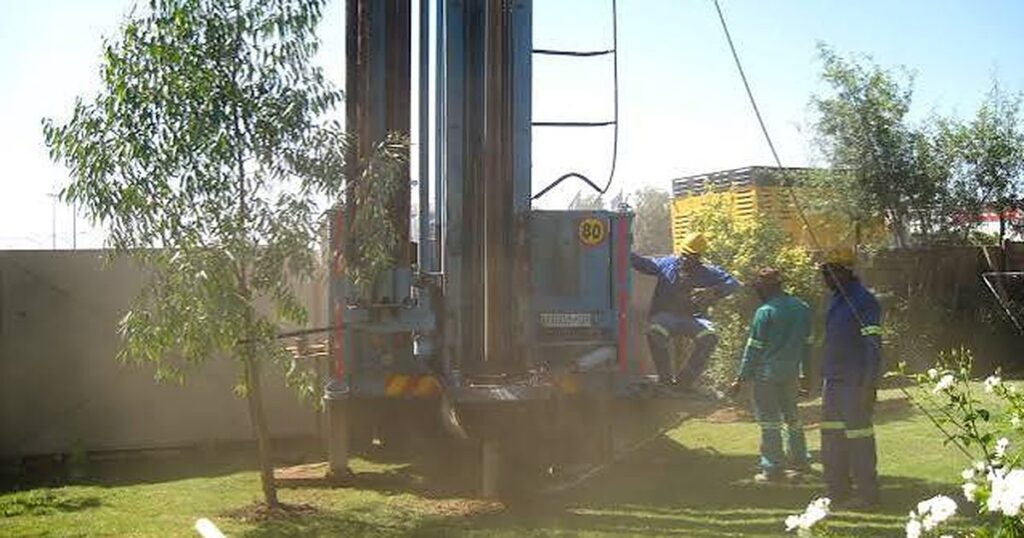
- Drill, case and test the borehole.
- Install the pump, tank and electrical supply.
- Test your water quality.
- Fit the correct filtration system.
Most domestic boreholes take one to two days to drill. The full project takes longer, because of the pump, plumbing and water testing.
Tip 3: Know How Much a Borehole Costs to Install
Next, the big question: “how much does a borehole cost to install?”
Costs vary a lot. As a guide, 2026 industry estimates put drilling alone at roughly R310 to R420 per metre. A typical domestic project often falls between R50,000 and R200,000. Most home boreholes are 30 m to 100 m deep.
Your final price depends on:
- Depth and rock type
- Casing needs
- Yield testing
- Pump size and type
- Storage tank and pressure system
- Electrical or solar supply
- Water testing and filtration
Important: If the hole is dry, you usually still pay for the drilling. So, budget for risk. Also, ask every driller for a written quote.
Tip 4: Get a Site Survey Before You Drill
Do not guess where to drill. A hydrogeologist or an experienced siter can improve your chances of hitting water. A survey costs little compared with a dry hole.
A good survey looks at:
- Local geology and aquifers
- Existing boreholes nearby
- Fault lines and fractures
- Access for the drilling rig
The Groundwater Division of the Geological Society of South Africa is a useful place to start. It lists professionals and resources.
Tip 5: Choose a Reputable Driller
Now comes a key step. You need to know “who does boreholes?” and “who does boreholes in Cape Town?”
There are many borehole companies. Quality varies. Here is what to look for before you get a borehole installed:
- Proof of experience and references
- Registration and professional memberships
- Clear, written quotes
- A drilling log and yield test report
- A warranty on workmanship
- A driller who follows SANS standards
When you search for borehole drillers in Cape Town, compare at least three. Ask each one the same questions. Then compare like with like. Remember: the cheapest quote is rarely the best one.
The Water Research Commission and the Water Institute of Southern Africa publish useful guidance on groundwater and water quality.
Tip 6: Plan Your Pump, Tank and Power
The borehole is only one part of the system. You also need:
A pump
Submersible pumps are common. Size matters. A pump that is too big can drain the borehole. A pump that is too small will frustrate you.
A storage tank
A tank smooths out supply. It also protects the pump. Think about a float valve that works well. For example, SANS Water offers the Tank Buddy, a manual, no-electricity adjustable float. We also supply the SANS Air Extreme Tank Aerator, which helps keep stored water fresher.
Power
Electricity is common. Solar is a growing choice. It helps during load shedding. It also cuts running costs over time.
Tip 7: Plan Your Irrigation Early
Most borehole owners use water outside. So, plan your irrigation at the start.
Good irrigation design saves water. It also protects your pump. Consider:
- Drip lines for beds and shrubs
- Pop-up sprayers for lawns
- Timers and controllers
- Filters that stop sand and grit blocking nozzles
Trusted irrigation resources include Rain Bird, Hunter Industries, Netafim and the Southern African Irrigation Institute (SABI). They offer design guides and product information.
Finally, remember the rules. In Cape Town, outdoor use of borehole water may be limited during restrictions. Check the current level first.
Tip 8: Test Your Borehole Water Before You Use It
Now for the question many homeowners ask late: “can I drink borehole water?”
The honest answer is this: not until you test it. Borehole water can look clear and still be unsafe. It can also be high in salts, iron, manganese or hardness. In coastal areas, it can be brackish.
What a proper test includes
- Microbiological tests (such as E. coli and total coliforms)
- Chemical tests (such as pH, nitrates, iron and manganese)
- Physical tests (such as turbidity and TDS)
- A comparison against SANS 241, the South African drinking water standard
Why accreditation matters
Use a lab accredited by SANAS. Accredited results are trusted by banks, insurers and buyers. Labs such as Bemlab are well known in the Western Cape. The SABS publishes the SANS standards.
How SANS Water helps: We send you a test kit. You collect your sample. The lab tests it, which takes about 10 working days. Then you get a clear report and an accredited certificate. We also design a filtration system to suit your results. Visit sanswater.co.za to start.
Tip 9: Match Your Filtration System to Your Water
This is where many people go wrong. They buy a filter first and test later. Do it the other way around.
Every borehole is different. So, every system should be different too. Filtering borehole water works best when it targets your actual problems.
Common borehole water problems and fixes
- Sand and silt: sediment filters
- Bad taste and smell: activated carbon filters
- Iron and manganese: oxidation and iron-removal filters
- Hardness: water softeners
- Bacteria and viruses: UV disinfection or chlorination
- High salts or TDS: reverse osmosis
Whole-house or point-of-use?
For household filtration, you have two choices. A whole-house system treats all the water that enters your home. A point-of-use system treats one tap, usually for drinking. Many homes use both.
Together, boreholes and filtration systems give you safe, reliable water. Without filtration, you risk damaged appliances, stained basins and health problems.
We also supply the SANS Lefty Loosey Spanner. It loosens stubborn Big Blue canisters, so filter changes are easy.
Tip 10: Maintain Your Borehole and Keep Records
A borehole is not a “set and forget” system. Look after it. Then it will look after you.
- Meter your water use.
- Keep records of readings.
- Service the pump as advised.
- Change filters on schedule.
- Re-test your water once a year.
- Keep your registration and test certificates safe.
These records matter. Some banks and buyers ask for a borehole certificate, water test results or proof of registration. So, good records protect your property value.
Frequently Asked Questions About Boreholes
Is it worth putting a borehole in?
Yes. This is especially true for large gardens, pools and high-use homes. Work out your drilling cost, pump cost and filtration cost. Then compare them with your current water bill.
How much does a borehole cost to install?
Drilling alone is roughly R310 to R420 per metre, based on 2026 industry estimates. A full domestic project can range from about R50,000 to R200,000. Get written quotes for your site.
Can I drink borehole water?
Only after testing. Use a SANAS-accredited lab. Then treat the water based on your results.
Are boreholes legal?
Yes. Households using water for reasonable domestic purposes generally fall under Schedule 1 of the National Water Act. However, municipal by-laws still apply. In Cape Town, check the City’s current requirements.
Who does boreholes in Cape Town?
Many registered borehole companies serve the Cape Town area. Compare several borehole drillers. Check references, ask for a written quote and confirm what is included.
What are the things to look for before you get a borehole installed?
Look for legal compliance, a site survey, a reputable driller, a clear quote, a pump plan, a water test and a filtration plan.
Final Thoughts
A borehole is a smart investment when you plan it well. Check the rules. Survey the site. Choose your driller with care. Test your water. Then filter it properly.
If you have decided on a borehole, start with the water test. It tells you exactly what you are dealing with.
Ready to test your borehole water? Contact SANS Water on 084 400 4300 or email mike@sanswater.co.za. Or visit www.sanswater.co.za.
This article is general information, not legal or engineering advice. Confirm current rules with the Department of Water and Sanitation and your municipality.
© 2026 SANS Water | All rights reserved | Terms and Conditions | Design and development by Michael Hastie.
+27 (0) 21 788 1302 | mike@sanswater.co.za
50 Promenade Road, Lakeside, Cape Town, South Africa