
mike@sanswater.co.za / call: 0844004300
- Home
- Water Testing
- Filtration
- Pricing
- Our Articles
- 10 Tips Once You Have Decided to Put in a Borehole
- 10 Frequently Asked Questions When Owning a Household Filtration System
- Whole House Water Filtration System: Maintenance Guide
- The Benefits of Installing a Water Filtration System in Your Home
- The Hidden Journey of Water: Infrastructure, Quality and Risk
- Water Testing Before Water Filtration
- Water Compliance is Key
- Easy To Test Your Drinking Water With Our Water Test Kit
- The Easiest Way To Test Your Water.
- The Advantages of Using Filtered Ground Water in Your Home
- How to Save Water in South Africa: Practical Tips for Every Household
- Essential Guide to Water Testing in Cape Town: Is Your Water Safe?
- Why & How To Cover Your Back When It Comes To Your Water Quality
- SA Water Crisis
- Managing Effluent Water Testing
- SANS 241 Water Testing
- Why pH Isn’t Enough: The Hidden Danger Lurking in Your Water
- Businesses Need To Test Their Water
- Why You Need To Test Your Council Water
- Why Water Testing Is So Important
- Businesses Need A Water Audit
- It Is Vital To Maintain Your Filtration System
- Water Testing For Corrosive Water
- Contact Us
10 Frequently Asked Questions When Owning a Household Filtration System
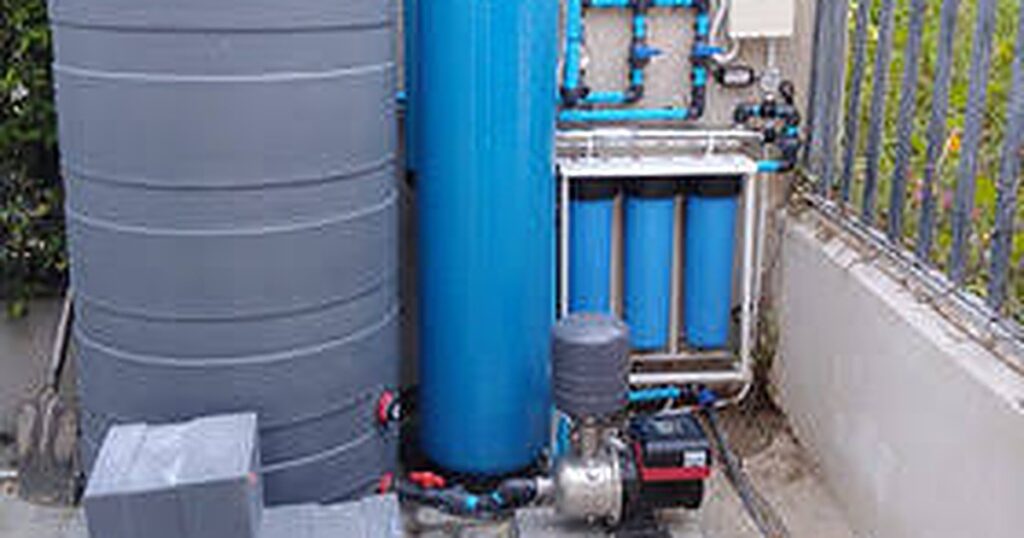
A household filtration system gives your family clean, safe water every day. However, it needs regular care to keep working well. Therefore, we answer the 10 questions our customers ask most.
You will learn about changing filters, big blue housings, water tanks and booster pumps. You will also learn why water testing matters. In short, this guide shows you how to get good quality water at home.
Key takeaways
- Change sediment filters every one to three months on borehole water.
- Release the pressure before you open a Big Blue canister.
- Aerate your water tank to oxidise iron and manganese.
- Test your water at least once a year.
- Fit an RPZ valve if you have a borehole or tank water.
Household Filtration System Maintenance: Filters and Media
1. How Often Should I Change My Filters?
Change sediment filters every one to three months on borehole water. On municipal water, every three to six months is usually enough. However, the right interval depends on how dirty your water is.
Watch your pressure gauges. For example, a drop of about 1 bar across a filter means it is clogged. Also change a filter if the flow slows or the water looks cloudy.
Carbon cartridges need changing about every six months. In addition, replace your UV lamp every 12 months, even if it still glows.
Changing filters on time protects your taps and appliances. Furthermore, a blocked sediment filter strains your booster pumps.
2. Why Can’t I Loosen My Big Blue Canister?
Your Big Blue housing is probably still under pressure. Alternatively, a dry O-ring or an over-tightened lid is gripping the thread.
Release the pressure first. Then use the right tool. Follow these steps:
- Switch off the pump.
- Close the inlet and outlet valves.
- Press the red pressure-release button on the lid.
- Wait until the hissing stops.
- Fit the SANS Lefty Loosey Spanner onto the canister.
- Turn it left to loosen.
Remember the rule: lefty loosey, righty tighty.
Afterwards, lubricate the O-ring with food-grade silicone grease. Never use petroleum jelly, because it swells the rubber. Also, tighten by hand first. Then add a small turn with the spanner.
You can buy the SANS Lefty Loosey Spanner at www.sanswater.co.za.
3. How Often Should I Change the Media in My FRP or Big Blue Vessel?
Most filter media lasts between one and ten years. The exact time depends on your water quality and how often you backwash. Use this table as a guide:
| Media | Typical lifespan | Replace sooner if… |
| Multimedia or sand | 5–7 years | Pressure stays low after backwashing |
| Birm | 3–5 years | Iron stains return |
| Katalox or DMI-65 | 5–10 years | Iron or manganese passes through |
| Activated carbon | 1–2 years | Taste or smell comes back |
| Softener resin | 8–10 years | Water feels hard again |
Watch for warning signs. For instance, brown stains, cloudy water or poor flow mean the media is tired. As a result, a quick water test is the best way to confirm.
Note that Big Blue cartridges are different. They are not media, so follow the interval in question 1.
Water Tanks, Aeration and Booster Pumps
4. How Can I Aerate My Tank Water and Oxidise Metals?
Fit a SANS Air Extreme Tank Aerator to your water tank. It pushes air through the water. Therefore, dissolved iron and manganese oxidise into solid particles. Your filters can then catch them easily.
Aeration does much more than that:
- It raises pH by releasing carbon dioxide.
- It keeps the surface moving, so mosquito larvae cannot settle.
- It gets rid of the rotten egg smell found in some groundwater.
- It keeps stored water fresher.
However, aeration targets iron and manganese. It does not remove every heavy metal. So test your water first.
Get the aerator at www.sanswater.co.za.
5. Which Float Switch Saves My Pump and Electricity?
The Tank Buddy is a smart choice. It is a manual float that uses no electricity. You adjust how far your tank empties before it refills.
Until now, only electric floats could do this. However, electric floats use power and can fail.
A bigger drawdown means fewer pump starts. As a result, your booster pumps run less often. Consequently, they last longer and use less electricity.
Iron Removal, Water Testing and the Best Filters
6. Which Media Is Best for Iron: DMI-65, Birm or Katalox?
For most borehole water, Katalox is our top pick. DMI-65 is a strong second. Birm suits only a few cases.
| Media | Best for | Watch out for |
| Katalox | High iron, manganese and rotten egg smell | Higher upfront cost |
| DMI-65 | Iron and manganese at higher flow rates | Needs correct pH, about 5.8–8.6 |
| Birm | Low iron and a small budget | Needs pH above 6.8 and good oxygen levels. Chlorine and hydrogen sulphide damage it |
Aeration helps all three media. Therefore, pair your media with a tank aerator. Above all, test your water before you choose.
7. How Often Should I Test My Water?
Test your water at least once a year with SANS Water. Test sooner if the taste, colour or smell changes. Also test after heavy rain, flooding or new borehole work.
Water testing shows what is really in your water. It also shows whether your filters still work. As a result, you fix problems before they harm your family or appliances.
Here is how it works. We send you a test kit and collect it. Then a SANAS-accredited lab tests your sample. You receive a clear report in about 10 working days.
8. What Are the Best Filters and Booster Pumps for Good Quality Water?
The best filters depend on your water test. No single filter suits every home. However, most borehole systems follow the same order:
- Water tank with an aerator
- Booster pump
- Sediment filter or multimedia filter
- Iron media (Katalox or DMI-65)
- Carbon filter for taste and smell
- UV steriliser for bacteria
A booster pump keeps your pressure steady. For example, a variable speed pump holds about 3 bar. Moreover, it starts softly and saves electricity.
That is how to get good quality water. First, test. Next, design the right filtration. Finally, maintain it.
Protecting Your Household Filtration System
9. Do I Need an RPZ Valve?
Most definitely, yes. An RPZ (reduced pressure zone) valve stops backflow. Without one, dirty water can flow back into the municipal supply.
You need an RPZ valve if your home has a borehole, a rainwater tank or any second water source. In fact, many municipalities require one. Also, have it tested every year by a qualified person.
SANS Water can supply and fit your RPZ valve. Visit www.sanswater.co.za to get started.
10. How Can I Tell If There Is a Leak in My System?
Fit a pressure gauge to one of your taps. Then turn all water off and watch the gauge. If the pressure drops, you have a leak.
Follow these steps:
- Close every tap and switch off irrigation.
- Let the system build pressure.
- Note the gauge reading.
- Wait 30 minutes with no water in use.
- Check the reading again.
Also listen to your pump. If it starts with every tap closed, water is escaping. Hidden leaks waste water and wear out your pump.
Keep Your Household Filtration System Working Well
A household filtration system is a long-term investment. With regular filter changes and yearly water testing, it protects your family and your plumbing.
Need help with filtration, water tanks or booster pumps? SANS Water can help.
- Phone: 0844004300
- Email: mike@sanswater.co.za
- Web: www.sanswater.co.za
© 2026 SANS Water | All rights reserved | Terms and Conditions | Design and development by Michael Hastie.

+27 (0) 21 788 1302 | mike@sanswater.co.za
50 Promenade Road, Lakeside, Cape Town, South Africa